
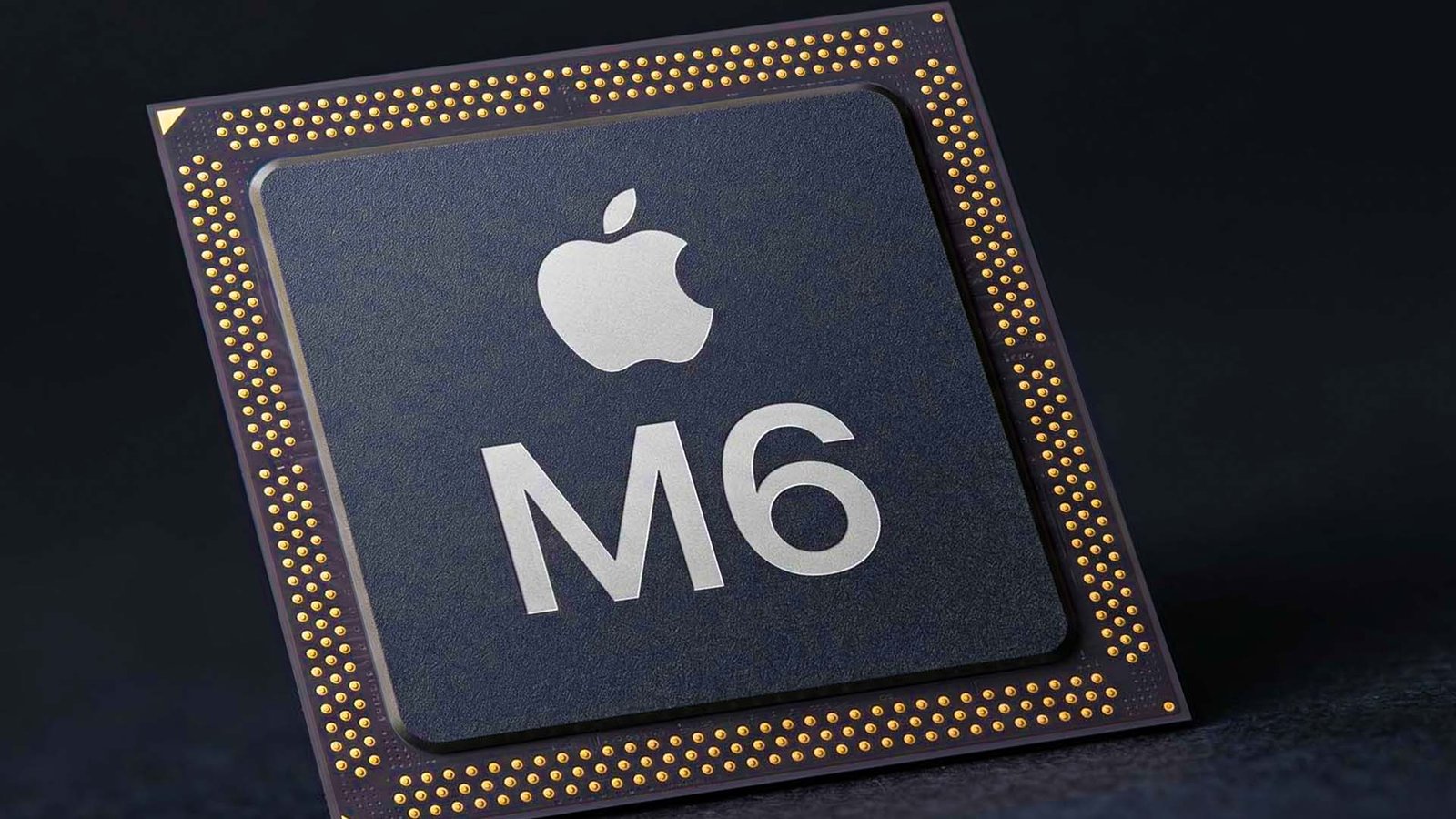
Apple M6 Launch Could Skip Pro and Max Chips
Apple could be preparing one of the biggest changes yet to its Apple Silicon roadmap, and it may leave some Mac users waiting longer than expected for premium upgrades.
A new report suggests the company is considering launching its upcoming M6 chip without the traditionally accompanying Pro and Max variants. If accurate, the move would break a pattern Apple has followed since introducing its custom Mac processors and could significantly reshape the timeline for future MacBook Pro releases.
For several generations, Apple has expanded each base M-series chip into more powerful Pro and Max versions designed for professionals, creators, and power users. Those higher-end chips have become a cornerstone of the MacBook Pro lineup, offering increased graphics performance, larger memory capacities, and stronger multitasking capabilities.
This year, however, the strategy may look very different.
According to reports, Apple is expected to unveil the standard M6 processor later in 2026, but the company may hold back the M6 Pro and M6 Max entirely. Instead, Apple could introduce more advanced M7 Pro and M7 Max chips alongside the next-generation M7 family at a later date.
Such a decision would represent a notable departure from Apple’s established release cycle. While the company has not publicly confirmed any changes to its chip plans, the report indicates that the shift may have occurred relatively recently.
The potential consequences extend beyond processors alone. One of the most anticipated future products in Apple’s Mac lineup is a redesigned MacBook Pro featuring OLED display technology.
Previous expectations suggested that the new OLED MacBook Pro models would launch with M6 Pro and M6 Max processors. If those chips never arrive, the redesign could be pushed further into the future, potentially delaying the introduction of Apple’s next major notebook overhaul.
That would mean users hoping for both a new display technology and more powerful Apple Silicon may need to wait until late 2027 before seeing those upgrades reach the market.
The standard M6 chip is still expected to bring meaningful improvements. Reports indicate that Apple is preparing enhancements to its unified memory architecture along with updates to the Neural Engine, the dedicated hardware responsible for machine learning and artificial intelligence tasks.
Graphics performance could also receive a boost.
The M6 is reportedly being developed with a redesigned graphics processor featuring as many as 12 GPU cores, compared with 10 cores on the current-generation M5 architecture. While not a revolutionary jump, the increase could provide smoother gaming performance, faster creative workloads, and stronger support for AI-driven applications.
Video processing is another area expected to benefit. Improved encoding and decoding capabilities could help content creators handle demanding video projects more efficiently while also improving power efficiency during media playback.
Even with those enhancements, the absence of Pro and Max variants would likely become the biggest talking point surrounding the M6 launch.
Professional users often wait specifically for Apple’s higher-tier chips before upgrading, particularly those working in video production, software development, engineering, and other performance-intensive fields. A gap in the lineup could encourage some customers to hold onto existing systems longer while awaiting the arrival of the M7 generation.
For now, the reported roadmap remains unconfirmed, and Apple has not commented publicly on future chip releases. Still, if the company follows this path, the M6 launch may be remembered less for the technology it introduces and more for the products it leaves behind.
A processor release that once seemed routine could end up signaling a much broader shift in Apple’s long-term Mac strategy.