
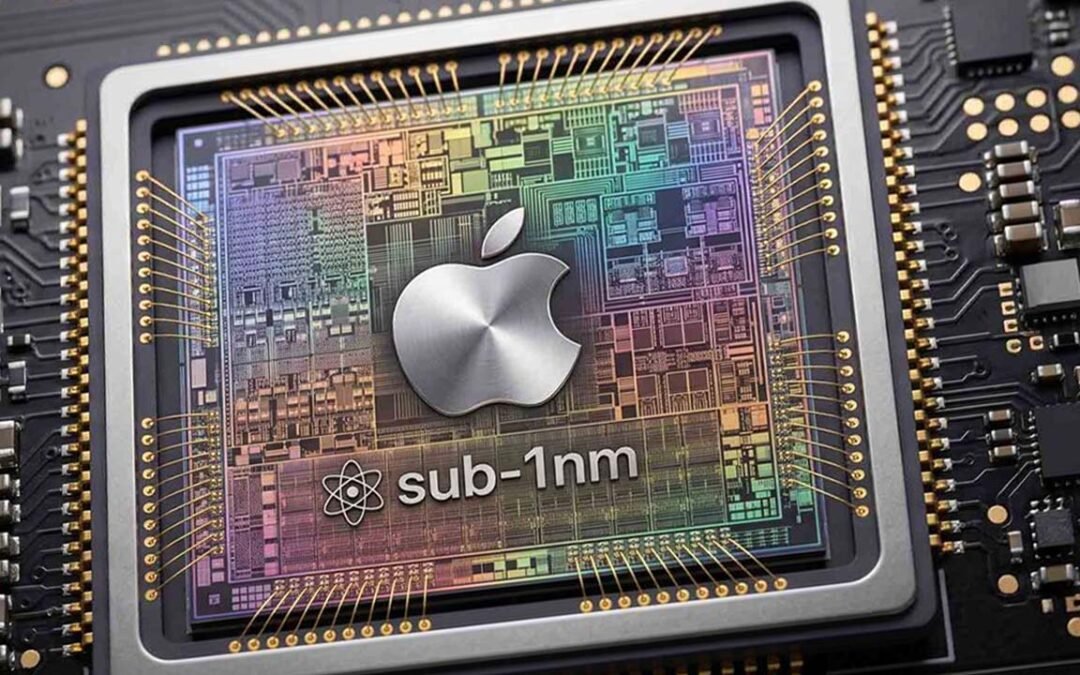
Apple M7 Rumored to Boost On-Device AI in 2027
Apple’s next-generation Mac processor may represent one of the company’s biggest artificial intelligence upgrades yet, with new reports pointing to substantial gains in memory performance designed to power more advanced AI features directly on users’ devices.
While Apple has yet to officially confirm the chip, early details suggest the rumored M7 processor could significantly outperform today’s base Apple Silicon in AI-related workloads, potentially making local large language models and other machine learning applications faster and more practical for everyday users.
The reported improvements center on one of the most important elements of modern AI computing: unified memory bandwidth.
Unlike traditional computer architectures that separate system memory from graphics memory, Apple’s unified memory design allows the CPU, GPU, and Neural Engine to access the same pool of high-speed memory. This architecture has become increasingly important as AI applications process larger models and more complex datasets directly on consumer devices.
According to the latest information, the M7 could feature unified memory bandwidth of approximately 240GB per second.
That would represent an increase of roughly 56% compared with the 153GB per second available on the standard M5 processor. Although still below the reported 307GB per second offered by the M5 Pro, the jump would mark a substantial improvement for Apple’s mainstream chip lineup.
For users interested in running AI tools locally, higher memory bandwidth can translate into faster inference speeds, reduced waiting times, and smoother handling of larger language models without depending entirely on cloud-based services.
The timing of the new processor is also attracting attention.
Reports indicate Apple is targeting a release during the first half of 2027, potentially giving the M6 generation a shorter lifespan than previous Apple Silicon releases. If that schedule proves accurate, the M6 could remain Apple’s flagship base processor for only a limited period before the M7 arrives.
The chip is also expected to benefit from advances in semiconductor manufacturing.
Industry expectations point toward production using TSMC’s next-generation 2-nanometer process technology, a move that could improve performance while reducing power consumption. Smaller manufacturing processes generally allow chips to achieve higher clock speeds and better efficiency without increasing energy demands.
Beyond manufacturing improvements, many specifications remain unknown.
Apple has not revealed how many CPU cores, GPU cores, or Neural Engine enhancements the M7 may include. Even so, analysts believe memory performance alone could make a noticeable difference for AI-powered features expected to become increasingly central across macOS and Apple’s broader ecosystem.
The M7’s arrival could also reshape Apple’s broader Mac roadmap.
Separate reports have suggested the company may skip introducing M6 Pro and M6 Max processors altogether, instead launching M7 Pro and M7 Max chips alongside the standard M7. If that strategy materializes, professional users waiting for more powerful MacBook Pro models may see a larger leap in performance when the next generation arrives.
For developers, content creators, researchers, and AI enthusiasts, the rumored improvements could make Apple’s entry-level Macs considerably more capable than previous generations.
As on-device AI becomes a defining feature across the technology industry, faster memory systems are increasingly viewed as essential rather than optional. Apple’s reported plans suggest the company is preparing its future processors with that shift firmly in mind.
For now, the M7 remains an unconfirmed product, and its final specifications could change before launch.
Still, if the reported memory upgrades and release timeline prove accurate, Apple’s next-generation chip could become one of its most important advances yet, not because of raw processing power alone, but because it is designed for an era in which artificial intelligence plays a central role in everyday computing.