
iPhone 18 Pro Leak Reveals A20 Pro Chip Changes
Apple’s next-generation iPhone processor may be getting a significant internal redesign, even if it looks almost identical on the outside.
A newly surfaced leak claims the upcoming A20 Pro chip, expected to power the iPhone 18 Pro lineup, will introduce a new packaging method, an enlarged Neural Engine, and improved thermal management—all while maintaining roughly the same physical footprint as its predecessor.
If accurate, the redesign would reflect Apple’s growing focus on boosting on-device artificial intelligence without increasing the size of its custom silicon.
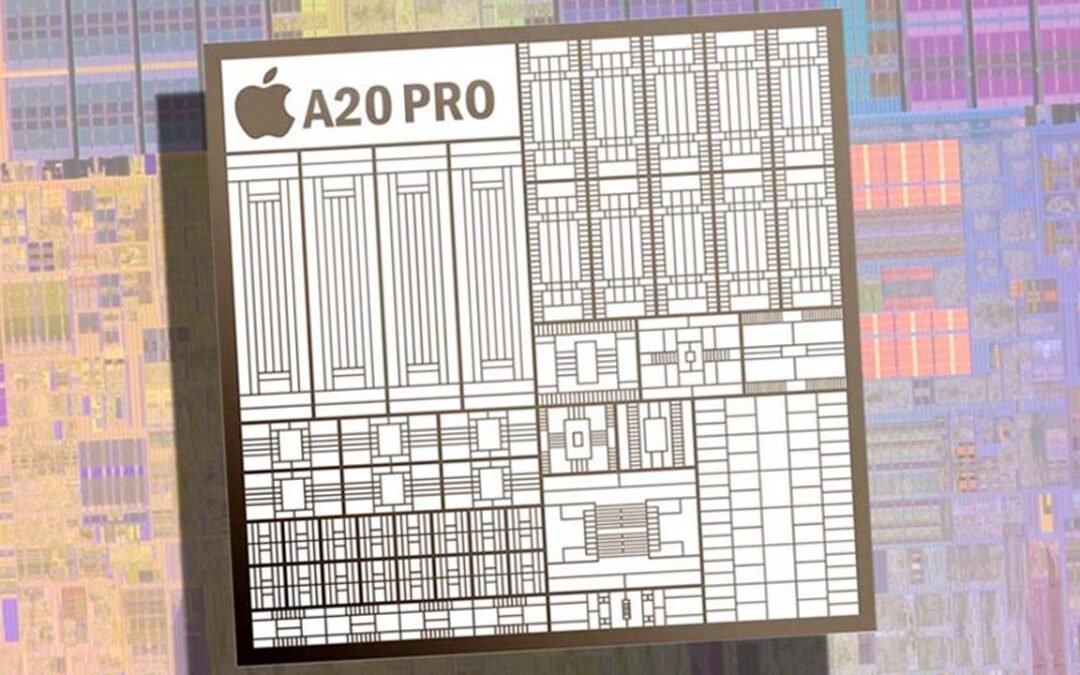
The leaked information centers on the iPhone 18 Pro logic board and the packaging surrounding the A20 Pro processor rather than the chip’s full specifications. Images circulating online appear to show schematic-style layouts instead of production hardware, but they offer clues about how Apple may be reorganizing internal components.
One of the most notable changes is the reported transition from Package-on-Package (PoP) technology to Wafer-Level Multi-Chip Module (WMCM) packaging.
Under the new design, memory is positioned alongside the processor instead of being stacked directly above it. This arrangement could improve heat dissipation by allowing thermal energy to spread more efficiently across the package, potentially helping the chip sustain high-performance workloads for longer periods.
Thermal performance has become increasingly important as smartphones handle more demanding artificial intelligence tasks, advanced gaming, video editing, and computational photography.
Previous generations of Apple’s flagship processors have delivered exceptional peak performance, but extended workloads can still generate enough heat to trigger thermal throttling, reducing processing speeds until temperatures return to safe levels.
A revised package design could help minimize those limitations.
The leak also suggests Apple has expanded the size of the Neural Engine inside the A20 Pro without increasing the processor’s overall package dimensions.
That change would likely be aimed at accelerating on-device AI capabilities, enabling future iPhone models to process more sophisticated machine learning workloads directly on the device instead of relying heavily on cloud-based servers. Faster local AI could improve everything from voice assistants and image generation to translation, writing tools, and intelligent photo editing.
Maintaining a similar package size despite enlarging one portion of the chip could also help Apple control manufacturing costs.
The A20 Pro is widely expected to be produced using TSMC’s advanced 2-nanometer manufacturing process, a technology anticipated to deliver higher performance and improved power efficiency but also higher production expenses. Preserving existing package dimensions may simplify aspects of manufacturing while limiting additional engineering costs.
Another detail mentioned in the leak involves memory support.
The report claims the A20 Pro may adopt LPDDR6 memory connected through a 96-bit memory bus, potentially offering increased bandwidth for AI and graphics workloads. However, that claim remains more speculative, as Apple has historically introduced new memory standards cautiously rather than adopting them immediately after they become available.
At this stage, none of the reported specifications have been officially confirmed by Apple.
As with any pre-release leak, details could change before the iPhone 18 Pro enters production or receives its official unveiling. Early engineering designs do not always reflect final commercial hardware.
Even so, the reported packaging changes align with broader industry trends.
Rather than relying solely on higher clock speeds or larger chips, semiconductor designers are increasingly focusing on packaging innovations, memory architecture, and AI acceleration to achieve meaningful performance improvements.
If these reports prove accurate, the A20 Pro could represent one of Apple’s most significant architectural updates in years—not because it is physically larger, but because it uses available space more efficiently to deliver faster AI performance, improved cooling, and better sustained performance for the next generation of iPhone users.