
Qualcomm HBC AI Memory Technology Explained
Artificial intelligence systems are becoming more powerful, but a growing problem is slowing them down: getting enough data to AI processors fast enough. Qualcomm believes its new High-Bandwidth Compute (HBC) architecture could offer a new approach to solving that challenge.
The company has introduced HBC as a next-generation memory solution designed for AI data centers, combining computing technology with stacked memory to improve performance, efficiency, and scalability. The announcement highlights Qualcomm’s attempt to compete in an increasingly important part of the AI infrastructure market.
Today, many advanced AI accelerators rely on High Bandwidth Memory (HBM), a technology widely used because it can deliver large amounts of data to processors quickly. However, as AI models continue growing in size, companies are facing higher power consumption, increasing costs, and limitations around memory capacity.
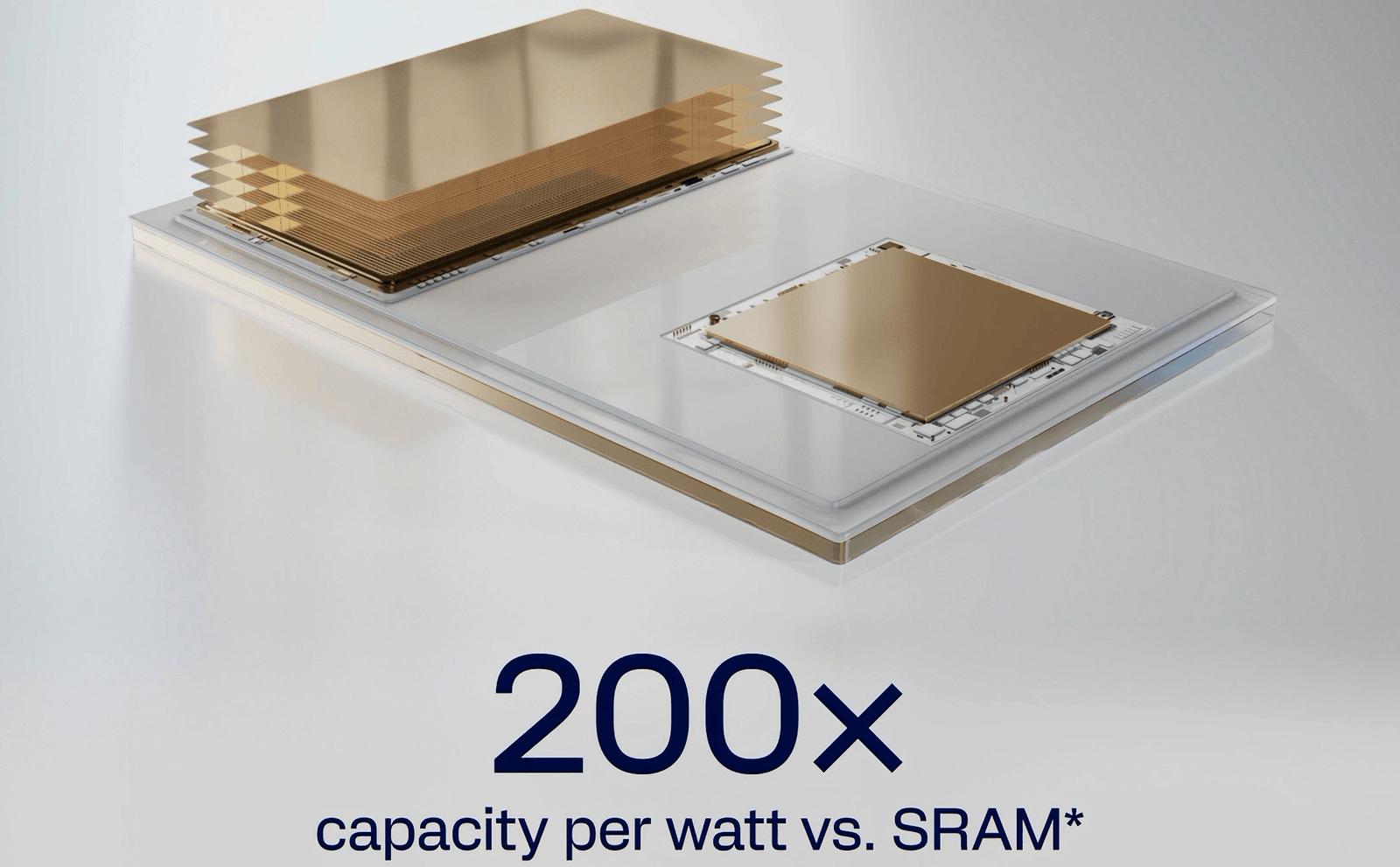
Qualcomm says HBC is designed to address those issues by placing a custom compute layer beneath an LPDDR memory stack in a 3D chip structure. The architecture connects the memory and compute components using Through-Silicon Vias (TSVs), allowing data to move more efficiently between layers.
The company says this approach could reduce energy use while increasing effective bandwidth compared with traditional memory configurations. Qualcomm claims its HBC technology can deliver up to six times more bandwidth per watt than HBM-based designs, while also offering a significant advantage over SRAM in capacity efficiency.
The focus on power efficiency has become a major concern across the AI industry. Training and running larger AI models requires massive amounts of computing power, and the cost of moving data between memory and processors has become one of the biggest barriers for future systems.
Qualcomm’s first-generation HBC implementation is expected to appear in its upcoming AI250 accelerator platform. The company says the accelerator will feature an HBC-enhanced LPDDR memory design capable of delivering 133 terabytes per second of bandwidth per card, representing a major increase compared with its previous AI200 platform using LPDDR5X memory.
The company is positioning LPDDR as a key part of its strategy because it can provide higher memory capacity compared with some existing high-performance memory solutions. Qualcomm believes combining larger memory capacity with near-memory computing could help data centers handle increasingly complex AI workloads.
The move comes as semiconductor companies race to develop technologies that can support the next generation of artificial intelligence. Memory has become a critical factor in AI performance, with companies looking beyond traditional processor improvements to gain additional speed and efficiency.
Qualcomm also shared plans for a second-generation HBC design expected alongside its future AI300 accelerator platform. The company projects that this next version could deliver even larger improvements in effective bandwidth compared with earlier generations.
While HBC represents a major technical shift, its real-world impact will depend on factors including manufacturing, software support, industry adoption, and how it performs against established AI memory technologies.
If Qualcomm’s claims translate into commercial products, HBC could become part of a broader industry shift toward new memory architectures designed to overcome the limits of today’s AI systems. The competition over AI infrastructure is expanding beyond processors, and memory innovation may become one of the defining battles ahead.